Canola Granola
Course: Breakfast
Servings
12
servingsCalories
200
kcalServing Size
1/3
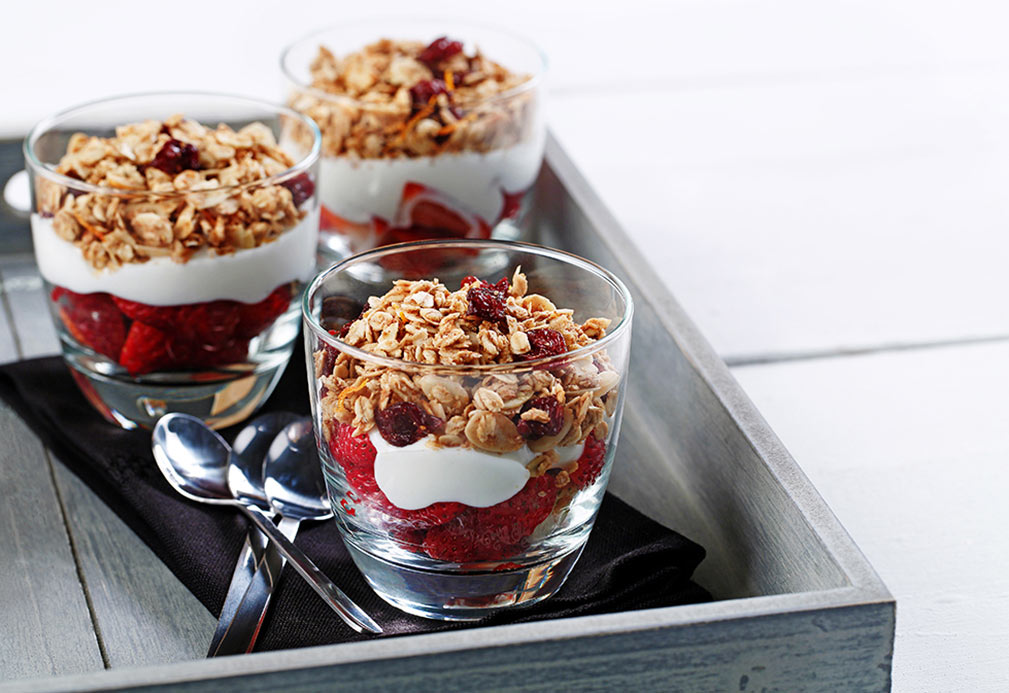
cup (75 mL)Fill several small snack bags with this tasty granola to have on hand when you need a quick pick-me-up.
Ingredients
canola oil cooking spray
2 cup 500 ml rolled oats
1⁄3 cup 75 ml wheat germ
1⁄2 cup 125 ml (2 oz/55 g) almond slices
2 tsp 10 ml ground cinnamon
1⁄8 tsp 0.5 ml salt, divided
1⁄4 cup 60 ml canola oil
1⁄4 cup 60 ml maple syrup
1 tbsp 15 ml fat-free milk
2 tsp 10 ml vanilla extract
1 cup 250 ml dried cherries
1 tbsp 15 ml orange zest
Directions
- Preheat oven to 300 °F (150 °C). Coat a baking sheet with canola oil cooking spray.
- Combine oats, wheat germ, almonds, cinnamon, and 1/4 tsp (1 mL) salt in a large bowl. Add canola oil, syrup, milk, and vanilla, stirring constantly.
- Spread mixture on a baking sheet in a layer about 1/4-inch thick. Bake 25-30 minutes until browned, stirring two or three times during cooking while breaking up large pieces. Remove from the oven, sprinkle evenly with remaining 1/8 tsp (.5 mL) salt, cherries, and zest. Cool completely. Store in a n airtight container in the refrigerator for up to two weeks
Notes
- Tip: Serve 1/3 cup (75 mL) granola over 6 oz (170 g) nonfat vanilla yogurt sweetened with a sugar substitute and 1/2 cup (125 mL) quartered strawberries and you'll get 10 grams of protein, 4 grams of fiber, vitamin C, calcium and more!
Nutrition Facts
12 servings per container
- Amount Per ServingCalories200
- % Daily Value *
- Total Fat
8g
13%
- Saturated Fat 1g 5%
- Cholesterol 0mg 0%
- Sodium 80mg 4%
- Total Carbohydrate
29g
10%
- Dietary Fiber 3g 12%
- Protein 4g 8%
* The % Daily Value tells you how much a nutrient in a serving of food contributes to a daily diet. 2,000 calories a day is used for general nutrition advice.