An Introduction to Cooking with Canola Oil
Fat plays several important roles in cooking. It acts as a heat transfer medium in frying, creates crisp textures and intense flavors when browning, moistens and tenderizes food, aids in leavening, creates emulsions and gives the mouth a feel we all enjoy. Replacing solid fats with liquid oils and non-hydrogenated fats will replace saturated and trans fatty acids with healthier monounsaturated and polyunsaturated fats.
Baking with Canola Oil
Canola oil is light, clear and has a mild flavor that does not interfere with the taste of baked goods. It blends easily with other ingredients to produce a moist product with soft texture.
Canola Oil Instead for Baking:
Reduce trans and saturated fats in your baking by replacing the solid fat or melted solid fat with liquid canola oil. Not only will you reduce the total fat by up to 25 percent but you will also replace the solid fat with liquid canola oil, which is lower in saturated fats and contains no trans fat. Use this chart to help you convert your recipes.
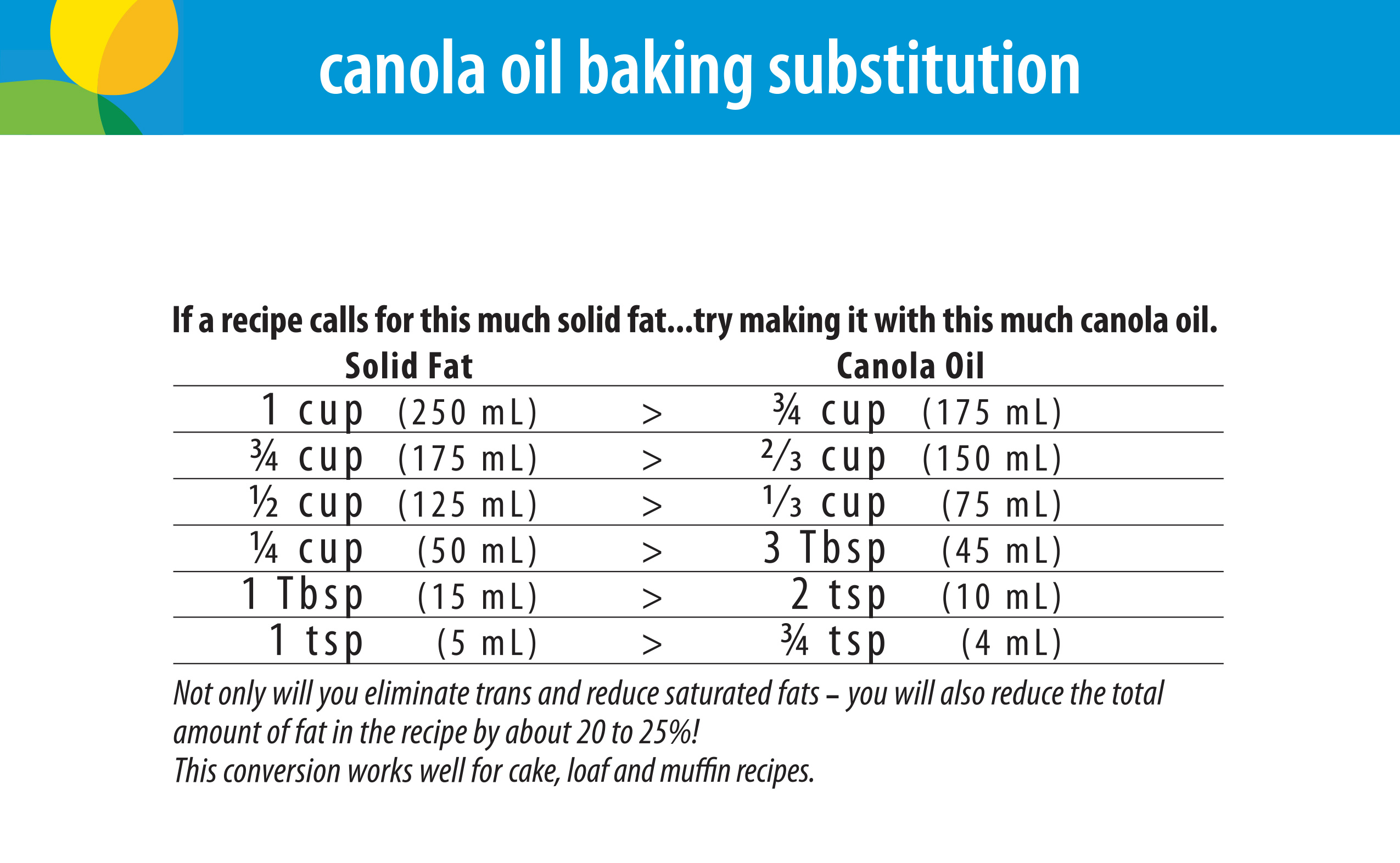 Note: This conversion works well for most baked goods, in fact, it makes most baked goods moister with a softer texture. For baked goods like cookies that use solid fat as a leavener; this conversion may not work as well.
Salads and Vinaigrettes with Canola Oil
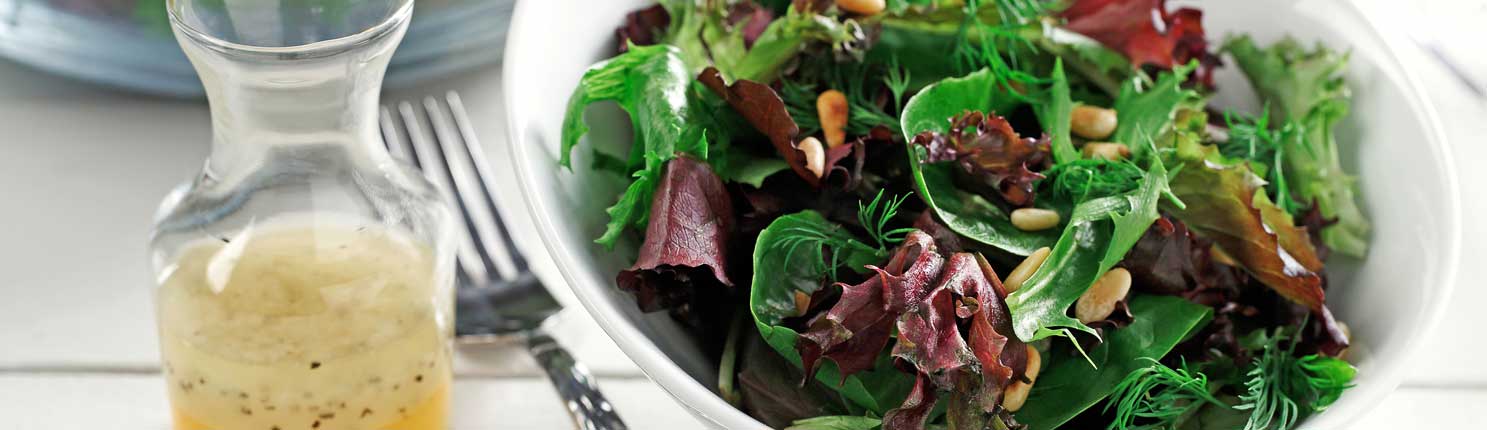
Any great salad deserves a great vinaigrette! A basic vinaigrette blends an acid, usually vinegar, lemon juice, etc., with oil, salt, pepper and other seasonings. Canola oil, which is light in color, texture, and taste is ideal for vinaigrettes. It allows for a smooth mouth feel without heaviness. The vinaigrette will remain clear and free running when refrigerated because of the lower saturated fat content of canola oil.
Vinaigrette Tips:
Preparing your own vinaigrette allows you to control the flavor as well as the fat content. Traditional proportions were 3 to 4 parts oil to 1 part vinegar. Try a 2 to 1 ratio or experiment until you find the proportions of oil and vinegar you like. Blend canola oil and vinegar, then add herbs and spices such as salt, pepper, garlic, mustard, ginger. Substitute lemon, lime or orange juice for vinegar, if you like. Vinaigrettes can also be used as a marinade for vegetables, poultry or meat.
Saute & Stir Fry with Canola Oil
Canola oil's light texture is the perfect choice for sautéing or stir-frying. Stir-frying means to quickly sear small pieces of food in a large pan or wok over high heat. Searing meat, vegetables and sauces at high heat seals in flavors and nutrients, caramelizes sugars and evaporates excess juices.
Preparation is Everything:
One of the most important steps in stir-frying or sautéing is to prepare all of the ingredients before starting to cook. In fact, the preparation often takes more time than the cooking. Here are some other tips:
- Trim meat of visible fat, cut into strips. Partially freezing the meat for one hour allows for easier slicing.
- Marinate meat or other ingredients. Be sure to fully drain the marinade before cooking as the excess juice will stew rather than sear the meat.
- Cut vegetables and meat uniformly to ensure fast, even cooking.
- Combine sauce ingredients ahead of time and begin cooking side dishes, such as rice or noodles before starting to stir-fry.
Grilling with Canola Oil
With very little preparation, you can create some flavorful barbeque dishes using marinades. Marinades usually combine oil, acids, herbs and spices, and often a sweetener. Acids such as vinegar, wine or citrus juices act as tenderizers while oils help foods retain moisture. Canola oil with its light taste allows marinade-seasoning flavors such as garlic, mustard, herbs, and other spices to dominate. Sweeteners, like honey, maple syrup, or brown sugar, aid in browning and take the edge off acid ingredients but may burn easily. Watch carefully to avoid charring the food.
Grilling Tips:
- Be sure the grill is clean, brushed with oil and hot before starting to cook.
- For added flavour, baste food with its marinade while it cooks, but stop basting meat at least 5 minutes before it's cooked to eliminate any chance of bacteria from the raw meat.
- Do not overcook lean meats, poultry and seafood since they will quickly dry out. Oil-based marinades are necessary to keep them moist and juicy during cooking.
- Retain juices, when grilling meats, use tongs instead of piercing with a fork. Turn thin cuts like steaks and burgers only once.
- Never place the cooked meat, poultry or seafood back on the marinating dish that contained the raw food without first thoroughly washing it with hot, soapy water.
Marinating Tips:
- Foods should always be covered and refrigerated during marinating. Using canola oil allows your marinade to remain free running when refrigerated and its light taste allows the flavor of herbs and spices to dominate.
- Do not marinate foods in any type of metallic container, as the acids in the marinade will react with the metal. Instead, place food in a sealable plastic or glass container, and cover.
- Foods should be turned occasionally to ensure that all sides are coated evenly with the marinade. A plastic bag that can be sealed is a convenient alternative that allows food to be easily turned.
Deep-Frying with Canola Oil
Deep-frying should be considered as an occasional way of cooking food but it is important to know how to do it safely.
Deep Frying Tips:
- Maintain a frying temperature of 375 degrees F (190 degrees C). A batter-coated or breaded surface will quickly form a protective shield, preventing the oil from penetrating the cooled food and making it greasy. The food will cook by conduction or indirect heat.
- If the oil is not hot enough, oil will reach the food before the coating cooks enough to form the protective layer with less than desirable results.
- If the oil is too hot, the coating will burn from the direct heat of the oil before the food has had time to cook.
- Avoid adding salt to food before deep frying. The salt draws moisture to the food's surface, which will splatter when the food is added to the hot oil. Salt also lowers the smoke point and breaks down the oil more quickly.
- Avoid crowding the deep fryer with food as it will lower the oil's temperature, causing the food to take longer to cook.
- Preheat the oil to about 15 degrees F (7 to 8 degrees C) higher than its optimal deep frying temperature, allowing the oil to return to its 'ideal' temperature once cold food is added to be cooked.
Storing Used Oil:
When the oil has cooled enough that it is safe to handle, strain it into a clean, glass jar. Do not mix it with unused oil.
Store the oil, tightly sealed, in a cool, dark place or in the refrigerator.
It's time for an oil change...
- When loose particles accumulate as sediment at the bottom of the storage container or are suspended in the oil.
- When smoke appears on the oil's surface before the temperature reaches 375 degrees F (190 degrees C), your oil will no longer deep fry effectively.
- When the oil has a rancid or "off" smell or if it smells like the foods you've cooked in it. The oil should be discarded.
Facts about Smoke Point:
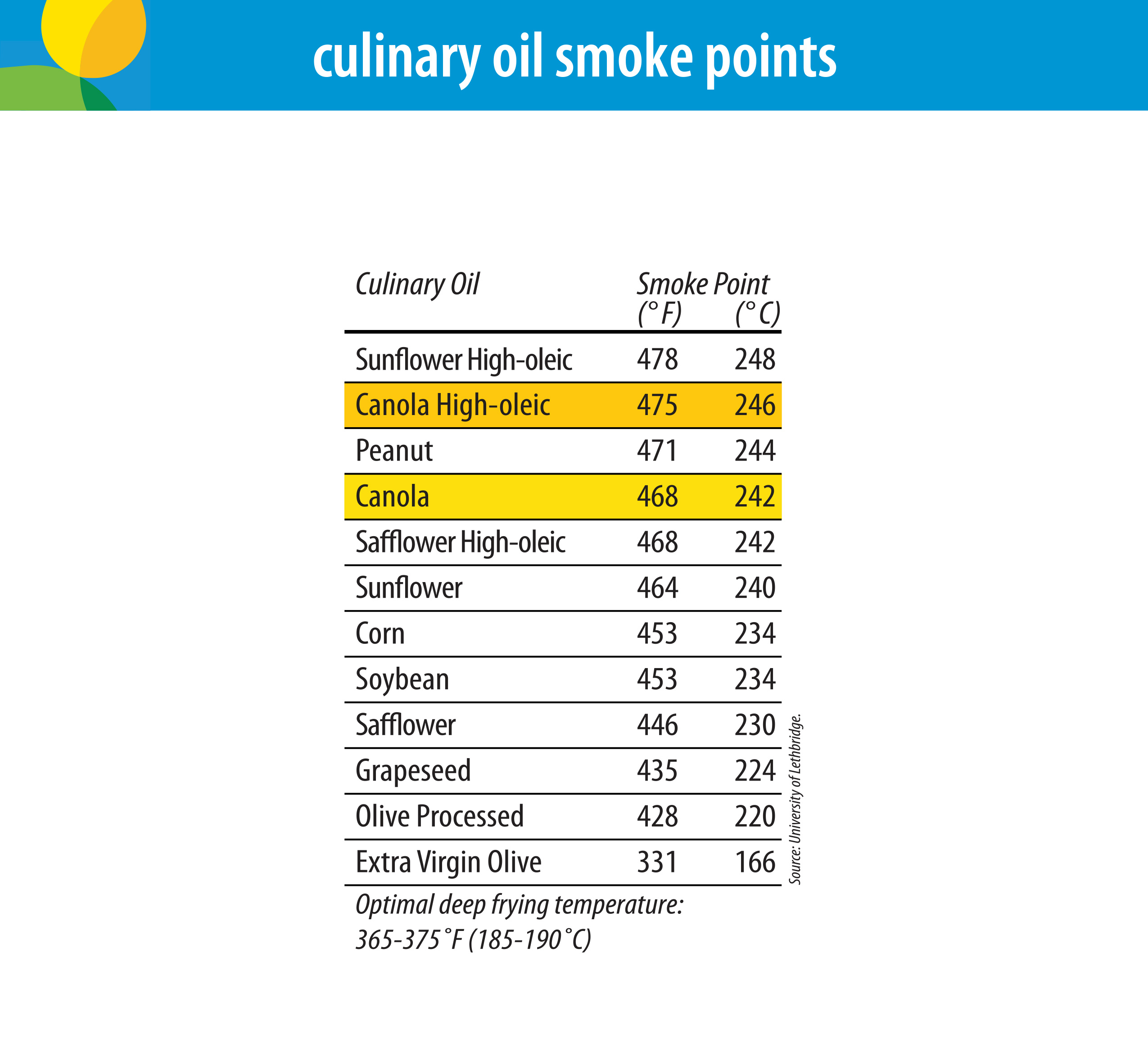
The smoke point of an oil is the temperature at which the oil begins to smoke.. Canola oil has a high smoke point 468 degrees F (242 degrees C). Oil that has been used previously will have a lower smoke point.