
CanolaInfo.org
  CanolaInfo on Facebook   CanolaInfo on Twitter   CanolaInfo on YouTube  

English | Español | Français | 한국어

 
Home About CanolaInfo What is Canola Oil? Health & Nutrition Recipes & Cooking Chefs Using Canola Oil The Food Industry News & Events Downloads & Resources Contact Us
LINK LINK
Health & Nutrition
Canola Oil is Healthy
Canola Oil Health Claim
Fat Chart & Nutrition Analysis
Ask a Nutrition Expert
Health & Nutrition Articles
Info for Health Professionals
CanolaInfo Partners for Health
Canola Oil Research
curve


Canola Oil is Healthy

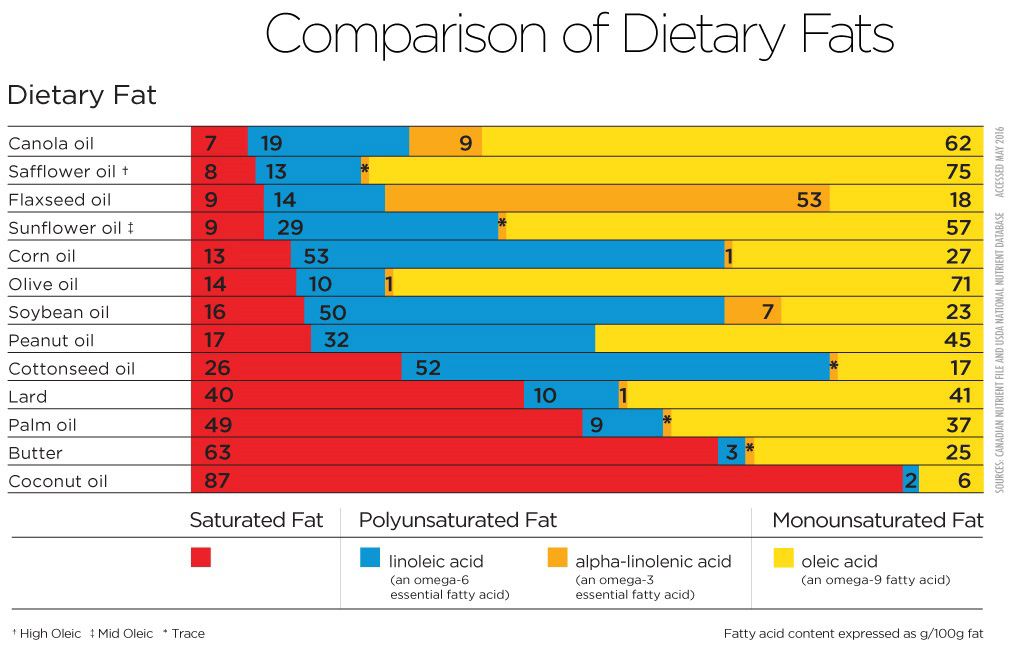
One dietary message for consumers has not changed in a decade: eat less fat. This advice aims to help millions of North Americans reduce their risk of overweight, obesity and diabetes. In recent years, a new message about fat has emerged - the type of fat in the diet is also important. Canola oil is the best blend of fats for good health. Check out the Dietary Fat Chart, to compare common culinary oils and to learn more about different types of fats.

Not All Fats Are Created Equally!

Your body needs fat to provide energy and help you absorb fat-soluble vitamins. Certain fats such as omega-3 and omega-6 fats are essential for good nutrition and must be consumed as part of a healthy diet. It is important to choose fats wisely because some fats are healthier for you than others. Canola oil provides more healthier fats than any other popular vegetable oil.

  Did You Know

Canola Oil is:

Low in saturated fat: Saturated fat raises the bad LDL cholesterol in your blood and has been linked to increased risk of coronary heart disease.

A source of omega-6 fat: Omega-6 fat must be consumed in your diet and is important for the brain and essential for the growth and development of infants.

High in omega-3 fat: Omega-3 fat must also be consumed in your diet and helps protect against heart attacks and strokes.

High in monounsaturated fat: Monounsaturated fat may reduce the risk of coronary heart disease by lowering bad LDL cholesterol in the blood and helping control blood glucose.

Cholesterol and trans fat free: Trans fat raises bad LDL cholesterol and lowers good HDL cholesterol.


  Did You Know

Canola oil may reduce the risk of Coronary Heart Disease

The U.S. Food and Drug Administration authorized, in October 2006, a qualified health claim for canola oil based on its high percentage of unsaturated fats. The claim states:

"Limited and not conclusive scientific evidence suggests that eating about one and a half tablespoons (19 grams) of canola oil daily may reduce the risk of coronary heart disease due to the unsaturated fat content in canola oil. To achieve this possible benefit, canola oil is to replace a similar amount of saturated fat and not increase the total number of calories you eat in a day."


 hello

Sign up for the CanolaInfo Email Newsletter

 hello


How do you get the right fats in your diet?

Health professionals recommend:

  • Keeping total fat intake between 25 to 35 percent of calories.
  • Choosing monounsaturated fat from sources such as nuts, seeds and vegetable oils including canola oil.
  • Increasing omega-3 fat from sources such as salmon, lake trout, walnuts, and canola oil.
  • Consuming less than 10 percent of calories from saturated fat per day.
  • Avoiding trans fat.
  • Avoiding dietary fats that increase cholesterol.

The Importance of Fat in the Human Diet

Moderation is a key word when talking about fats in the diet. Fat is an important part of the diet, providing the greatest output of energy per gram of any food and improving the flavor of food. When stored in the body, fat helps maintain body temperature by acting as an insulator.

However, there is general agreement among health professionals that excess fat in the diet can raise the level of cholesterol in the blood. Research indicates that high levels of blood cholesterol can lead to heart disease.

With its low saturated fat level, excellent balance of polyunsaturated and monounsaturated fats, and its versatility and light taste, canola oil has found an important place in the world's kitchens, food processing companies and restaurants.


Fats are made of smaller units called fatty acids. Canola oil is low in saturated fatty acids. In fact, it is lower in saturated fat than any vegetable oil found in supermarkets today.


Best Fatty Acid Ratio

Nutrition experts recognize canola oil as having the best fatty acid ratio. Research indicates the fatty acid composition of canola oil is most favourable in terms of health benefits and as a part of a nutritionally balanced diet.

When canola oil is compared to other oils in today's market, canola oil has the lowest level of saturated fat (7 percent), it is relatively high in monounsaturated fat (61 percent), and canola oil has a moderate level of polyunsaturated fat (22 percent).

Canola Oil Versus Vegetable Oil

Some food products labeled "vegetable oil" may contain canola oil. "Vegetable oil" on a label allows a food manufacturer to substitute or combine oils without having to change the product label. A popular U.S. consumer magazine "Cooking Light" now specifically recommends canola oil instead of vegetable oil in its recipes. Many other cookbook authors, food writers and publications are following suit.


More Links & Info You Might Find Useful


Site Map | Privacy & Legal | ©Copyright 2007 CanolaInfo All Rights Reserved

SmartSite created by Arxus | Powered by Quadrant


Quick Contact Information

Phone: 1-866-479-0853
Email: Click to email CanolaInfo

Click for more contact information

Canola Council of Canada